
Home health equipment should match the person’s needs and the care plan. There is no universal set of ten items that every household must buy. Use these ten categories to organise a conversation with your clinician, caregiver and dealer, and leave out anything that is not needed.
Ten equipment categories to consider
1. Temperature monitoring: a thermometer suitable for the person and the way it will be used.
2. Blood-pressure monitoring: a suitable monitor and cuff, when regular measurements are part of the care plan.
3. Blood-glucose monitoring: a meter and matching supplies, when advised by the care team.
4. Oxygen-saturation monitoring: a pulse oximeter, when advised, with guidance on interpreting the reading. A number alone should not determine a change in treatment.
5. Prescribed oxygen equipment: a concentrator or cylinder, with the prescribed delivery accessories and a provider-agreed backup plan.
6. Prescribed sleep or breathing support: a CPAP or BPAP device and compatible mask, when specified by the treating clinician.
7. Prescribed inhaled-medicine delivery: a nebulizer and suitable accessories, when nebulized medication is prescribed.
8. Mobility aids: a walking aid or wheelchair selected for the person’s abilities, transfers and home layout.
9. Bathing and toileting aids: suitable support equipment where assistance is needed for everyday tasks.
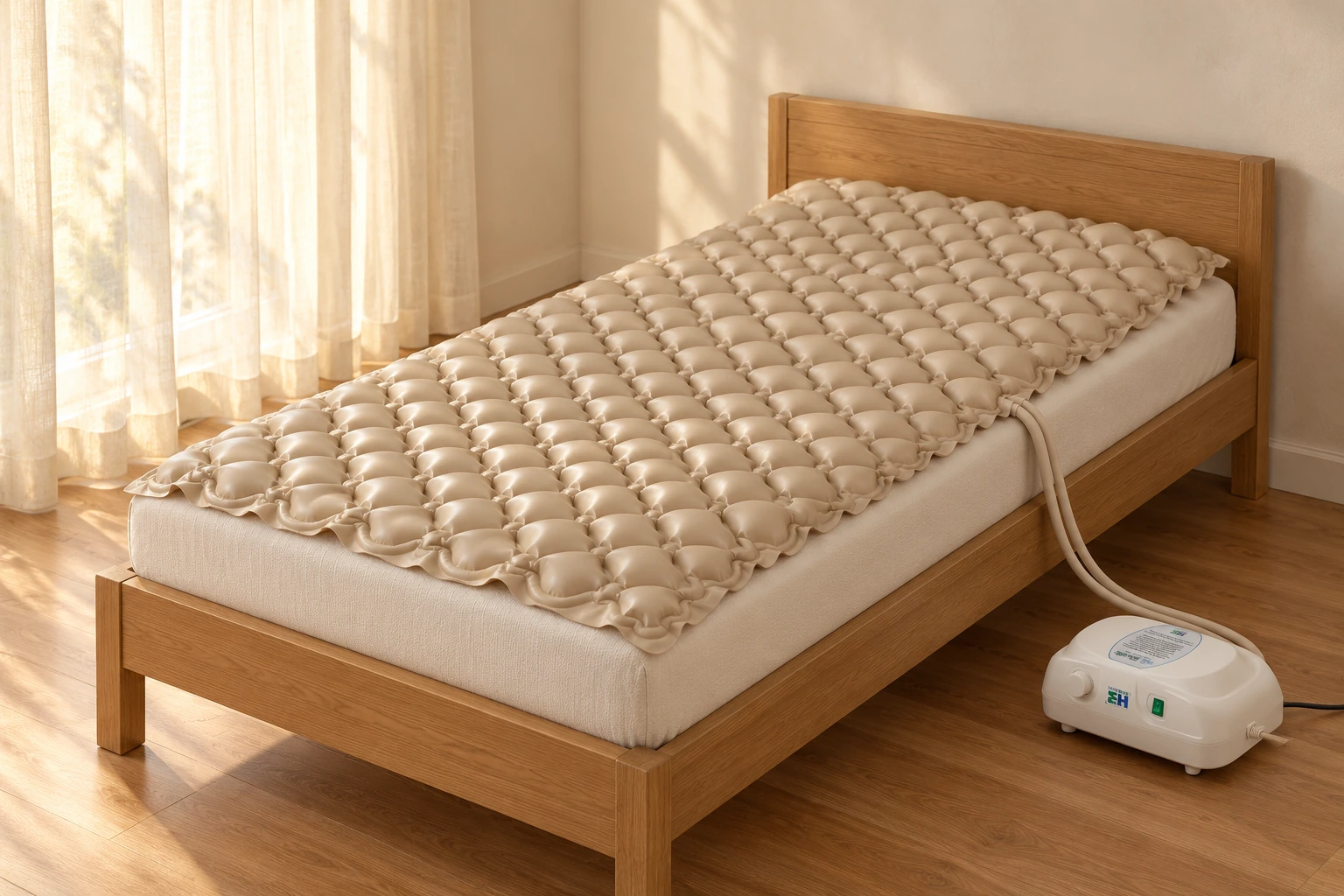
10. Bed and mattress support: equipment chosen around comfort, mobility and the care team’s positioning or pressure-care advice. A mattress does not replace an individual care plan.
Prepare the home before delivery
Check that equipment fits through entrances and can be used in the intended room. Confirm any required power supply and the manufacturer’s environmental requirements. Arrange a demonstration for the person who will use or care for the equipment.
Keep the manual, cleaning and maintenance instructions, supplier details and emergency contact information together. Ask the provider how to respond to alarms or a power interruption. Clinical questions and treatment changes belong with the care team; equipment questions belong with the supplier.
Build the purchase list around the care plan
Record the recommended item, exact model or compatibility requirement, included accessories, replacement supplies and the responsible contact. For purchases through a dealer, confirm warranty and support arrangements before payment. Avoid choosing equipment solely because it appears on a generic essentials list.
Explore current Home Medix options
The current Home Medix range includes respiratory devices, nebulizers and selected home-health products. This guide covers broader categories and does not imply every example is available from Home Medix.