
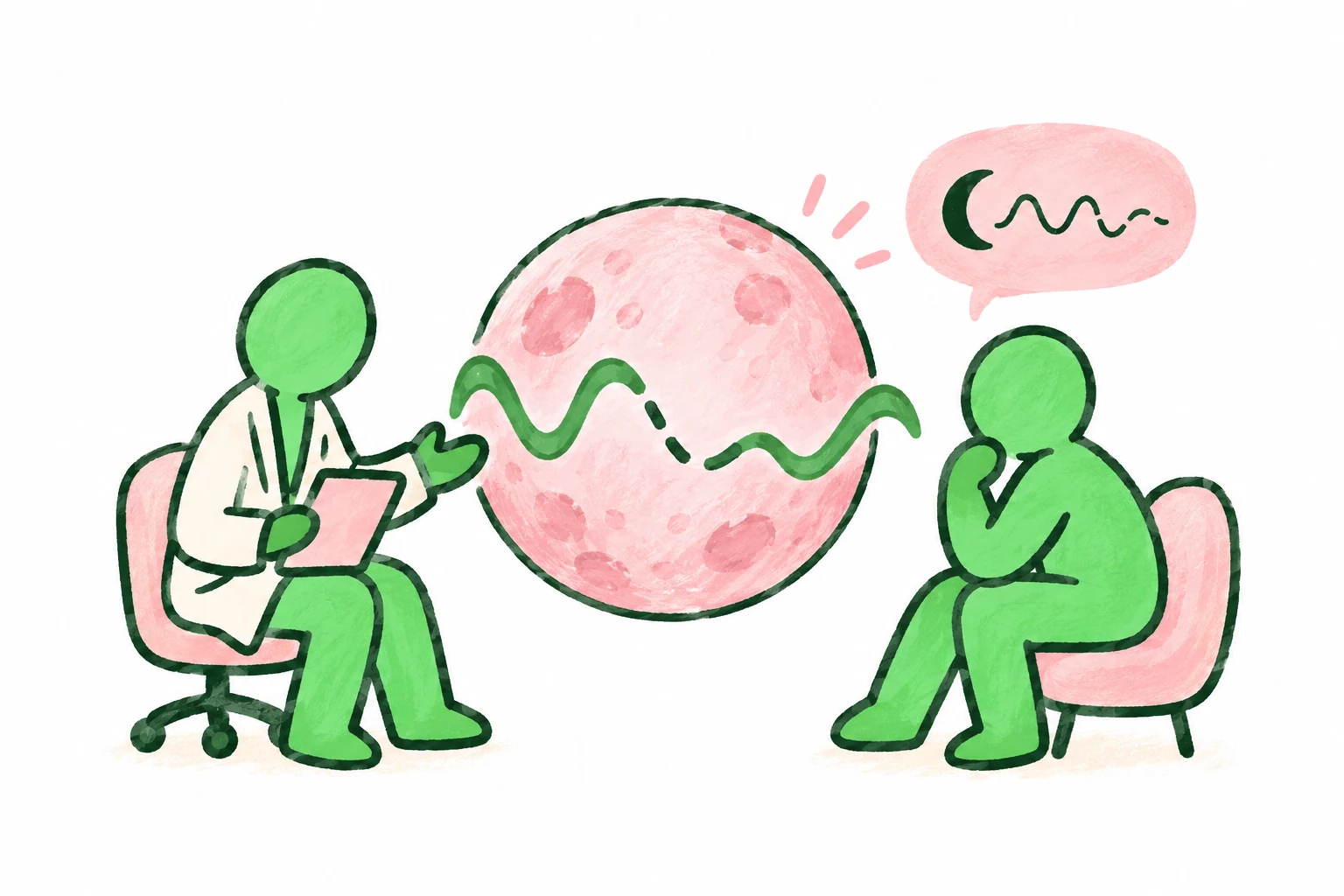
New central-event or clear-airway flags after starting CPAP can be unsettling. They do not, on their own, prove that the machine has caused a new disorder. The first step is to confirm what the report measures and review the pattern with the sleep team.
A PAP machine usually infers airway behaviour from its own signals. It does not directly measure breathing effort in the same way as a full sleep study. Wakeful pauses, irregular breathing around sleep transitions and unreliable signals can complicate classification.
What treatment-emergent central apnea means
In some people treated for obstructive sleep apnea, central apneas emerge or persist when the obstruction is controlled. The term is treatment-emergent central sleep apnea. During a true central apnea, breathing effort pauses rather than continuing against an obstructed airway.
One possible mechanism involves instability in the body's control of ventilation and carbon dioxide. That explanation does not mean every new device flag represents this condition or that the same treatment is appropriate for everyone.
Why follow-up matters
Some confirmed cases improve with continued PAP and monitoring. Others persist or require earlier intervention. The decision depends on symptoms, the event pattern, associated conditions and the reliability of the data—not a universal eight-week waiting rule.
Contact the prescribing team when a new or sustained pattern appears. Report significant sleepiness, disturbed breathing and any relevant changes in medicines or health. Serious breathing difficulty, chest pain or new confusion requires urgent medical help.
What the team may review
Useful information includes the original sleep-study findings, date treatment started, usage, leak, prescribed settings and whether the event estimate is falling or rising. The clinician may consider further testing or treatment changes.
Current AASM guidance offers different options for different central-apnea causes; there is no automatic switch from CPAP to bilevel ST. If ASV is considered, cardiac status and applicable device contraindications matter. In reduced-ejection-fraction heart failure, current guidance specifies experienced-centre care and close monitoring.
Do not independently increase pressure, stop prescribed medicines or buy another mode in response to an app label. Obtain a clear interim plan from the team, including when the data will be reviewed again.
Related reading: Obstructive, central and treatment-emergent sleep apnea