
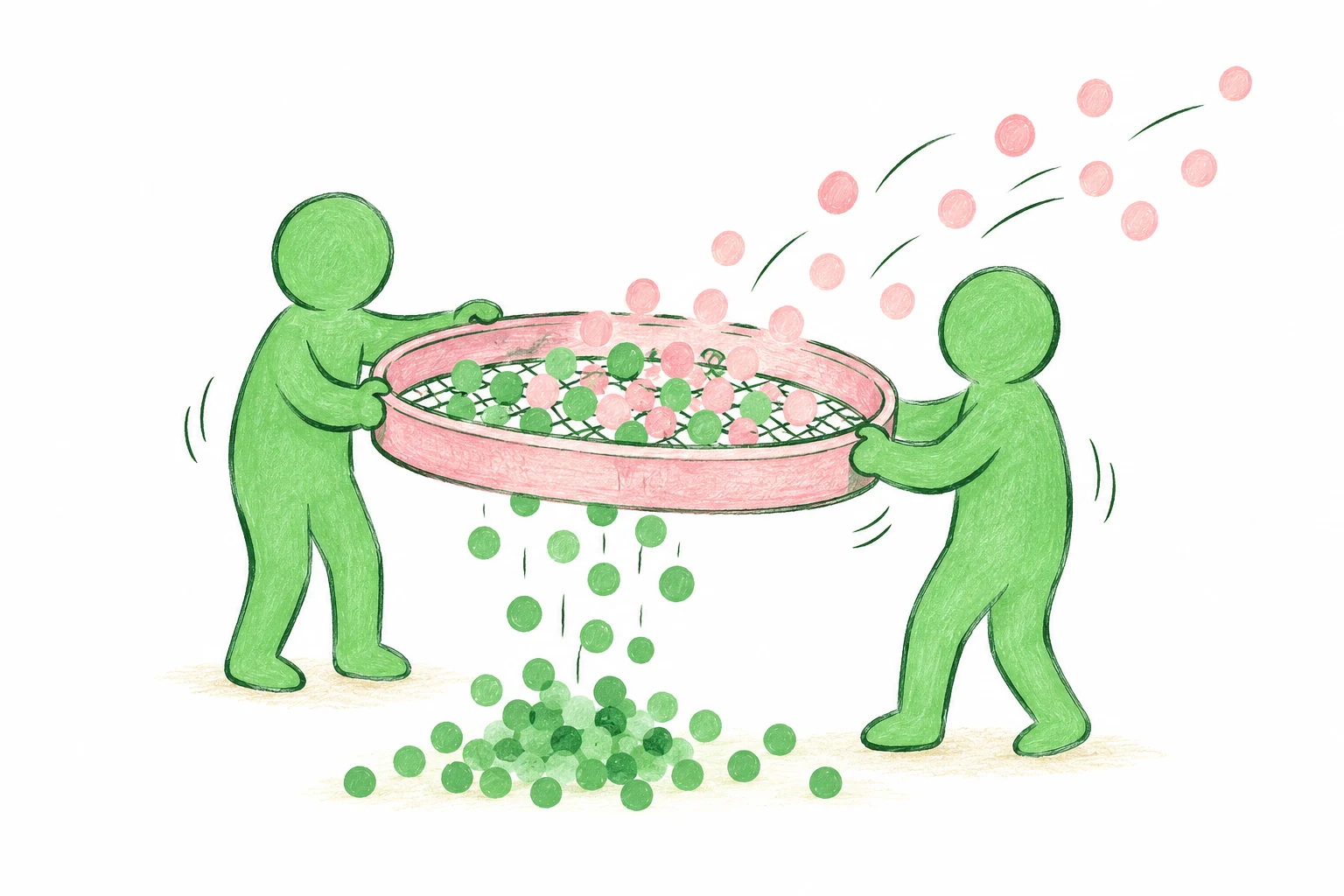
An oxygen concentrator separates oxygen from room air. It does not manufacture oxygen from another substance or contain the same reserve as a filled medical-oxygen cylinder. Most home concentrators use pressure swing adsorption, usually shortened to PSA.
The useful idea is simple: a material inside the device holds on to more nitrogen under pressure, leaving a stream richer in oxygen. The machine repeatedly changes the pressure so that material can be used again.
Follow the air through the machine
Room air first passes through the device’s intake and filtration system. A compressor then sends air into vessels containing a porous material called zeolite. These vessels are often described as molecular-sieve beds.
Under the conditions designed into the machine, the zeolite preferentially adsorbs nitrogen. Adsorption means that molecules are held on surfaces within the material. More oxygen remains in the gas that passes onwards.
While one bed is producing oxygen-rich gas, another can release pressure and discharge much of the captured nitrogen. Valves alternate the beds, and a buffer volume helps smooth the output. Details such as pressure, timing, filtration and bed design vary; they are factory engineering settings, not user adjustments.
Why the output is not pure oxygen
The process does not separate every gas perfectly. Some argon and residual nitrogen remain with the concentrated oxygen. That is why a medical concentrator has a specified concentration range rather than an assumption of 100% oxygen.
Read the range for the exact model and the conditions under which it applies. If a manufacturer specifies 93% ±3%, that means 90–96%. A measured result below that stated range at a rated flow is not made acceptable by calling it “normal PSA physics”. The supplier needs to assess it using the appropriate test method and conditions.
The concentration at the outlet is also different from the oxygen concentration a person inhales through a cannula, where additional room air mixes in. It is different again from the blood oxygen saturation estimated by a fingertip oximeter.
Why operating conditions matter
The compressor needs power, airflow and cooling. Filters and other parts need the maintenance specified for that model. Temperature, humidity and altitude limits describe where the equipment is intended to perform; they are not interchangeable between machines.
Do not exceed the rated flow, obstruct the vents or change internal cycle settings. If output falls or an alarm appears, follow the backup and service plan rather than turning down a prescribed flow to make the warning disappear.
What to ask when choosing a unit
Ask for the documented concentration at the prescribed flow, the operating limits, alarm functions and available service support. Knowing the sieve material alone does not establish a device’s quality, noise, lifetime or suitability.