
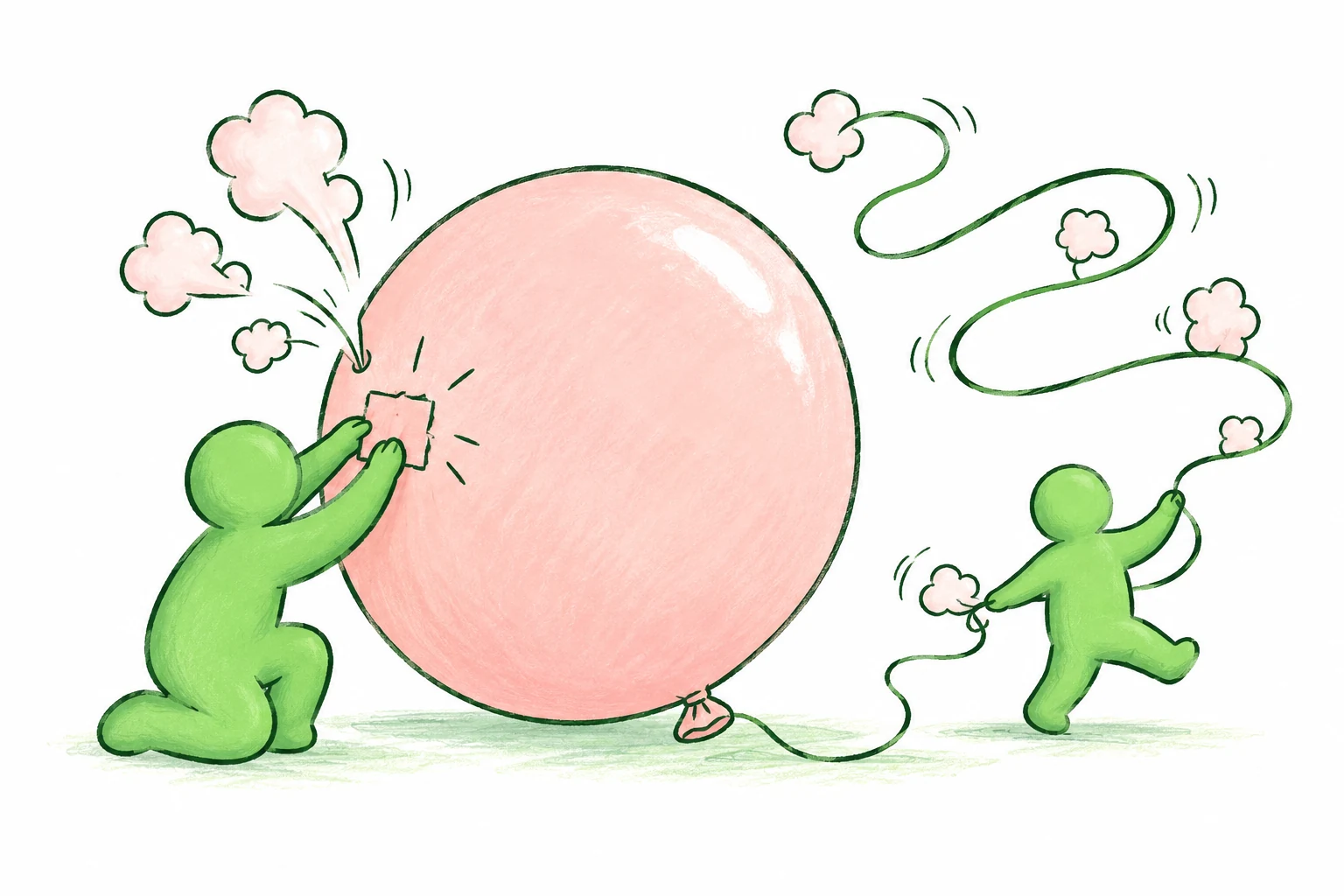
Air leaving a PAP mask is not always a fault. Many home PAP systems deliberately release air through an exhaust vent to clear exhaled gas. Unwanted leakage from a cushion, connection or mouth is a different problem. Knowing the difference helps you avoid “fixing” a necessary safety feature.
Leave the exhaust path clear
Use the mask and circuit specified for your device. Some systems have the exhaust in the mask; others use a separate arrangement. Never cover vents, tape over holes or substitute a non-vented interface without the prescribed circuit. A blocked exhaust can interfere with clearance of exhaled carbon dioxide.
Check the instructions if you are unsure whether a steady flow at the elbow is normal. The expected vent flow depends on the mask and pressure, so it is not a universal number.
Inspect the equipment
Look for a loose tube connection, damaged tubing or a chamber that is not seated correctly. Check the cushion and headgear for damage and fit the mask according to its instructions. A fit check in your usual sleeping position is more useful than tightening the straps while sitting upright.
Air blowing into the eyes or a leak that changes when the cushion is reseated suggests a fitting problem. Tightening harder can distort the cushion or injure skin. Persistent pain, sores or eye irritation needs prompt attention.
Consider mouth leakage without guessing
With a nasal interface, air can escape through the mouth. Dry mouth may be a clue, but it can also have other causes. The shape of a leak graph alone cannot reliably diagnose mouth opening or identify a sleep stage.
Discuss nasal symptoms and interface options with the care team. An oronasal mask may help some people but can develop its own seal leaks. Do not use mouth tape as a self-directed solution, particularly when nasal breathing or safe mask removal is uncertain.
Check the report after the fit
Large leaks can affect comfort, pressure delivery and the reliability of event estimates. Record when they occur and compare several nights. Confirm any mask or tubing configuration setting with the provider using the exact instructions; not every device estimates leak in the same way.
If simple fitting and connection checks do not resolve the issue, bring the mask, device details and report to follow-up. Do not change prescribed pressure to compensate for an unexplained leak.
Related reading: What is a normal CPAP leak number?