
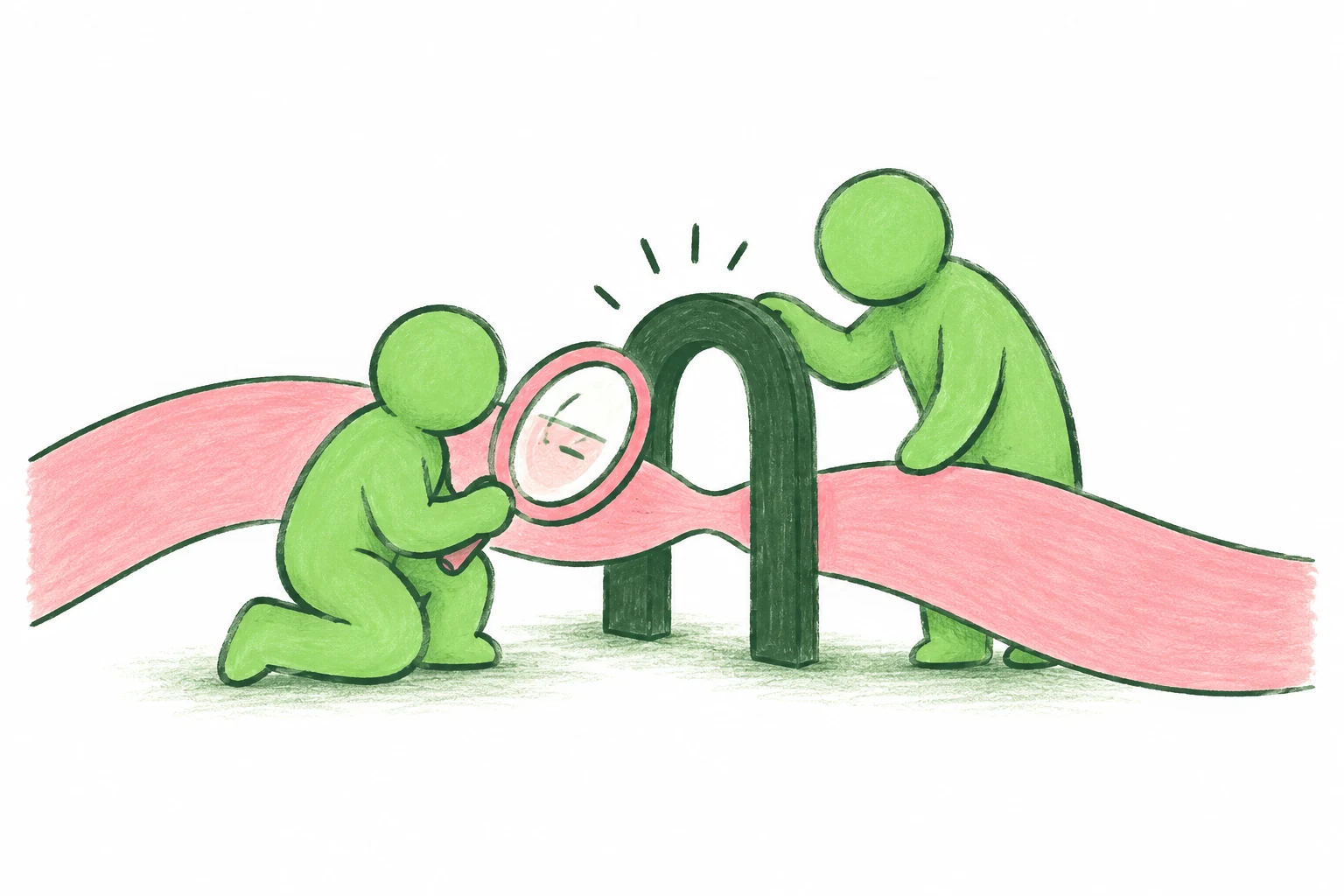
Flow limitation describes a pattern in which airflow during inspiration appears restricted. On a PAP trace, the top of an inward breath may look flattened rather than smoothly rounded. This can suggest upper-airway narrowing, but a single unusual breath does not establish a disorder.
The machine may report a graph, a numerical index or event flags. These are device-derived measures, and their scales are not standardised across every system. A value copied from another user's report may have a different meaning on yours.
How it differs from apnea and hypopnea
Apneas and hypopneas must meet defined scoring criteria. A breathing pattern can suggest restriction without meeting those criteria, so flow limitation does not automatically add to AHI.
In a sleep laboratory, a respiratory effort-related arousal, or RERA, involves a breathing disturbance ending in a brain arousal. EEG helps establish that arousal. A home PAP flow graph alone cannot prove that you woke briefly, identify a sleep stage or confirm that the pattern caused daytime symptoms.
Some auto-adjusting PAP systems respond to flow patterns as part of their pressure algorithm. That response is not independent confirmation of a diagnosis.
What makes a pattern worth reviewing
A persistent change is more useful than an isolated shape. Look at when it appeared, whether leak increased and whether symptoms changed at the same time. The clinician may review the original diagnosis, mask fit, pressure delivery and the limits of the recorded data.
If you still feel unrefreshed, flow limitation is one possible consideration. Insufficient sleep, insomnia, medicines, other sleep disorders and medical conditions can also contribute. A normal-looking flow graph does not rule these out, and an abnormal-looking graph does not make them irrelevant.
What to bring to the appointment
Bring the report with its device name, date range and scale, plus a description of your symptoms and usual sleep schedule. Ask whether the signal is reliable enough to guide treatment and whether further testing would change the plan.
Do not raise pressure or switch to bilevel simply to flatten a graph. Changes can affect leak, comfort and breathing stability. The aim is effective treatment and better functioning, not a particular waveform appearance.
Related reading: Still tired on CPAP despite a low AHI?